Your perfect summer day is here. Blue skies, calm seas, and your boat loaded with everything needed for the ultimate getaway. Then your battery dies.
The air conditioning stops. The refrigerator shuts down. Your electronics go dark.
A quality marine generator prevents these disasters. Marine generators provide electricity to power the various systems onboard, including lighting, refrigeration, navigation equipment, communication tools, and more. Unlike standard generators, these units withstand saltwater, humidity, and constant vibration.
Why Marine Generators Matter More Than You Think
Standard portable generators fail quickly in marine environments. Dissociated chloride ions (Cl−) in seawater may penetrate this protective film and initiate crevice/pitting corrosion. Saltwater attacks metal components relentlessly. Regular generators simply aren’t built for this punishment.
Marine-rated units feature specialized materials and coatings. High-quality marine generators are built with corrosion-resistant materials like stainless steel to ensure long-lasting durability. These protect against the harsh conditions that destroy standard equipment.
Your boat’s battery won’t power everything you need. When running any serious applicants that consume a good deal of power, such as air conditioners, refrigerators, or water heaters, a boat’s battery will not be sufficient. Air conditioning alone can drain batteries in hours.
Top 8 Marine Generators for 2025
1. Northern Lights 5/4.5 KW Marine Generator
This powerhouse delivers refined engineering for serious boaters. A one-piece heat exchanger, expansion tank, and liquid-cooled exhaust manifold is composed of cast iron to resist corrosion and electrolysis. The 3 cylinder vertical inline diesel engine runs at over 10 HP at a comfortable 1800 RPMs.
Power Output: 5 kW continuous Fuel Type: Diesel Key Features: Cast iron construction, liquid-cooled exhaust, +5% voltage regulation
Northern Lights generators use proven Shibaura engines with simple, logical control systems. With more machinery than electronics, Northern Lights is a favorite among many boaters. Parts are readily available, making repairs straightforward.
2. Cummins Onan QD Series
Cummins dominates the marine generator market for good reason. Being the largest distributor of marine generators in the industry, Cummins is able to provide quality customer assistance and product servicing. Their QD line offers exceptional reliability.
Power Output: Various options from 3.2-32 kW Fuel Type: Diesel Key Features: SAE J-1939 CAN data link, comprehensive monitoring
The brand recognition comes with substance. These generators feature advanced diagnostics and proven durability in marine conditions.
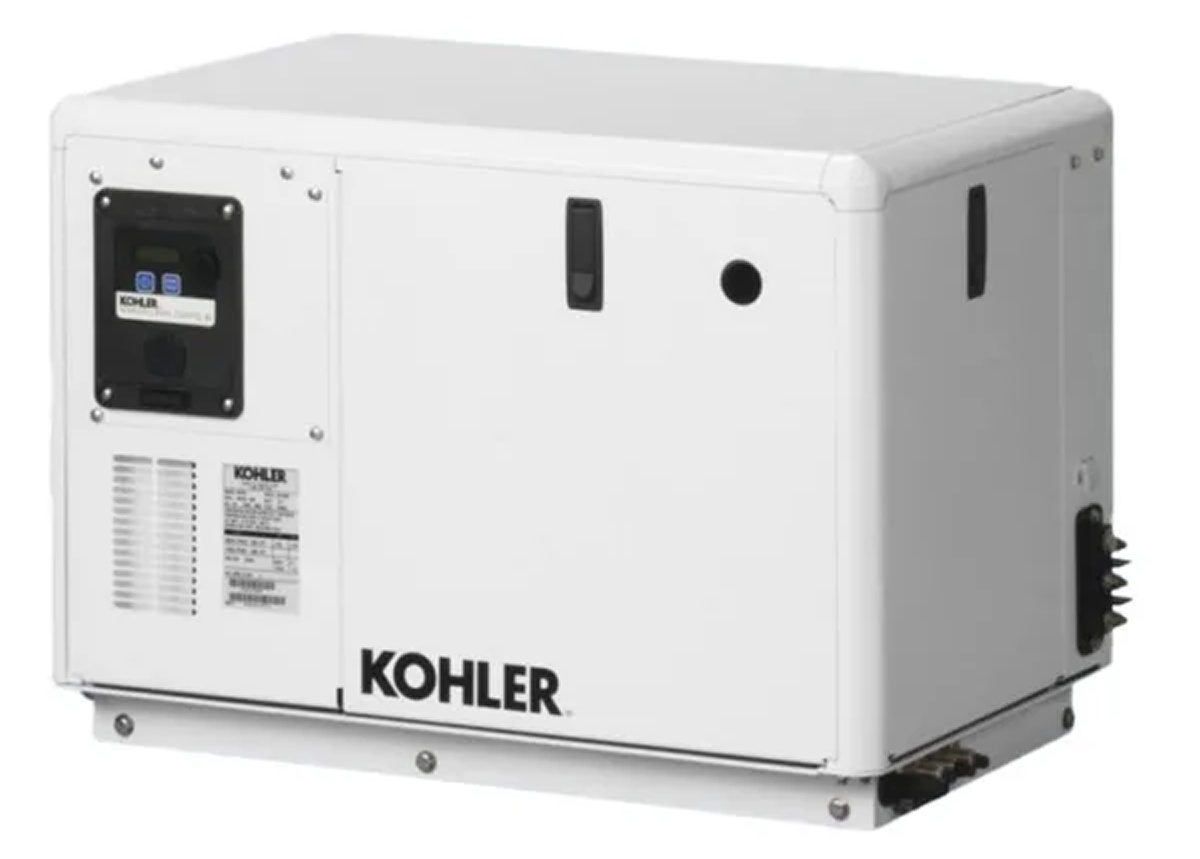
3. Kohler 6EKOD Marine Generator
Kohler’s lightweight diesel option balances power and portability. This single-phase 3 cylinder, 4 cycle motor runs efficiently and conforms to EPA Tier III axillary standards for emission control. Environmental compliance meets practical performance.
Power Output: 6 kW Fuel Type: Diesel Key Features: Lightweight design, EPA Tier III compliant, integrated heat exchanger
Optional sound shields and ignition protection enhance safety and comfort.
4. Westerbeke 7.5 MCGA
This gasoline-powered unit pioneers low-carbon monoxide technology. Westerbeke pioneered the low-CO gas generator and won the National Marine Manufacturers Association (NMMA) Innovation Award for this technology back in 2003.
Power Output: 7.5 kW Fuel Type: Gasoline Key Features: Multiport electronic fuel injection, electronic speed control, under 18 inches tall
Its three-cylinder gas engine uses a multiport electronic fuel injection system (MPI) to provide quicker starting and better fuel economy. The compact height works in tight engine compartments.
5. MASE Marine Diesel Generators
European engineering meets marine durability in MASE units. Mase strives to make marine generators that are easy to install onboard boats and maintain high efficiency and power throughout their lifespan.
Power Output: 4-14 kW range Fuel Type: Diesel Key Features: Soundproof frame, accessible panels, minimalistic design
These generators prioritize installation simplicity without sacrificing performance.
6. Phasor Marine Generators
Phasor specializes in heat-exchanged cooling systems for three decades. For over three decades, Phasor Marine has specialized in Heat Exchanged Cooled Marine systems. This focus creates exceptional reliability.
Power Output: 2-6 kW ultra-compact series Fuel Type: Diesel Key Features: Specialized marine cooling, compact design, proven reliability
Their expertise in marine-specific cooling systems shows in every unit.
7. Honda EU2200i Inverter Generator
For smaller boats needing portable power, Honda delivers quiet operation. Due to its extremely quiet, low-volume operation, it will keep the sound decibels to a minimum onboard. Marina neighbors will appreciate the consideration.
Power Output: 2,200 watts Fuel Type: Gasoline Key Features: Inverter technology, ultra-quiet operation, portable design
Perfect for cabin cruisers and smaller vessels requiring backup power.
8. PAGURO Marine Generators
Italian engineering creates efficient, reliable marine power. These generators combine European design standards with practical marine applications.
Power Output: 4-14 kW range Fuel Type: Diesel Key Features: Compact design, marine-grade construction, efficient operation
PAGURO units offer excellent power-to-size ratios for space-conscious installations.
Saltwater Protection: Your Generator’s Lifeline
Saltwater destroys unprotected equipment faster than most people realize. Resistant to Pitting and Crevice Corrosion: One of the main reasons metals corrode in saltwater is due to pitting and crevice corrosion. Marine-grade metals have a protective oxide layer, which prevents the initiation of these localised corrosions.
Quality marine generators use specific protective strategies. Marine diesel engine generators are specialized power units designed to operate in harsh marine environments. Unlike land-based generators, they are built to withstand saltwater corrosion, high humidity, and constant vibration while delivering reliable electricity.
Material Selection Matters
The best marine generators feature carefully chosen materials. Stainless Steel (316 & 316L): Perhaps one of the most widely recognised metal is the 316 stainless steel. This grade offers superior corrosion resistance compared to standard 304 stainless steel.
Bronze components provide natural saltwater resistance. Bronze: This alloy, primarily of copper and tin, possesses natural resistance to saltwater corrosion. Naval bronze, which contains zinc, is especially popular for marine applications.
Protective Coatings Add Defense
Beyond material selection, protective coatings enhance durability. Paints, galvanised coatings, and anodic protections are often employed to shield the metal from direct exposure to saltwater, significantly extending its lifespan.
Regular maintenance preserves these protective barriers. Check for corrosion around the generator’s components, particularly in saltwater environments. Early detection prevents major problems.
Power Sizing: Getting It Right
Undersized generators create frustration. Oversized units waste fuel and money. A great tool for determining what size generator to buy can be found on the Cummins website by clicking on the Marine Generator Sizing Tool.
Energy-hungry items demand attention during sizing. As a general rule, anything that cools or produces heat is an energy hog. Other items that are energy-needy are battery chargers (3,000 Watts), air compressors (1,500 Watts), and a Seakeeper 5 gyro stabilizer that pulls 2,000 Watts.
Start with your essential systems. List every appliance you’ll run simultaneously. Add 20% buffer for startup surges and future additions.
Diesel vs Gas: The Fuel Decision
Most boaters choose diesel for good reasons. Diesel engines are fuel-efficient, have longer lifespans, and offer greater power output, making them ideal for long voyages and heavy-duty usage. Range and reliability favor diesel for serious cruising.
With a lower fuel consumption rate you can keep your appliances powered for longer journeys, as well as take less fuel with you, decreasing the weight of your vessel. Fuel efficiency translates to extended range and reduced weight.
Gasoline makes sense in specific situations. If your boat comes standard with gasoline engines, and you are not going to far from shore, gas may be the more convenient choice. Fuel compatibility simplifies logistics.
Modern gas generators address traditional concerns. Westerbeke’s fuel-injected low-CO gasoline generators have been engineered to significantly reduce carbon monoxide emissions. Safety improvements make gas more viable.
Maintenance: Keeping Power Flowing
Marine generators demand regular attention. Generators like to be run. The marine environment is harsh on unused engines. You will have fewer problems if you use them regularly than if you let them sit and rust.
Create a maintenance schedule covering essential tasks. Regularly check fuel and oil levels to ensure smooth operation. Inspect the air filter to ensure the engine receives adequate airflow. Clean and inspect the cooling system to prevent overheating.
Professional servicing extends generator life significantly. Schedule professional servicing periodically to keep your generator in peak condition. Expert attention catches problems before they become failures.
Installation Considerations
Space constraints challenge most installations. Depending on the size of your boat, space may be limited for installing a generator. Choose a model that fits within the available space while still providing sufficient power.
Ventilation requirements demand careful planning. Ventilation: Ensure proper exhaust routing to prevent carbon monoxide buildup. Safety requires adequate airflow and proper exhaust systems.
Weight distribution affects boat handling. Consider generator placement’s impact on balance and trim. Professional installation ensures proper mounting and connections.
Making Your Summer Adventure Powered
The right marine generator transforms your boating experience. No more rationing power or cutting trips short due to dead batteries. Quality units deliver years of reliable service with proper care.
A high-quality marine generator will not only provide the electricity needed to run your boat’s systems but will also ensure you have the reliability and independence you need to enjoy your time on the water.
Choose based on your specific needs. Consider power requirements, fuel preferences, space constraints, and budget. Quality marine generators represent essential equipment, not optional accessories.
Your summer adventures deserve reliable power. Don’t let generator failure strand you or force uncomfortable compromises. Invest in proper marine power generation and enjoy every moment on the water.
